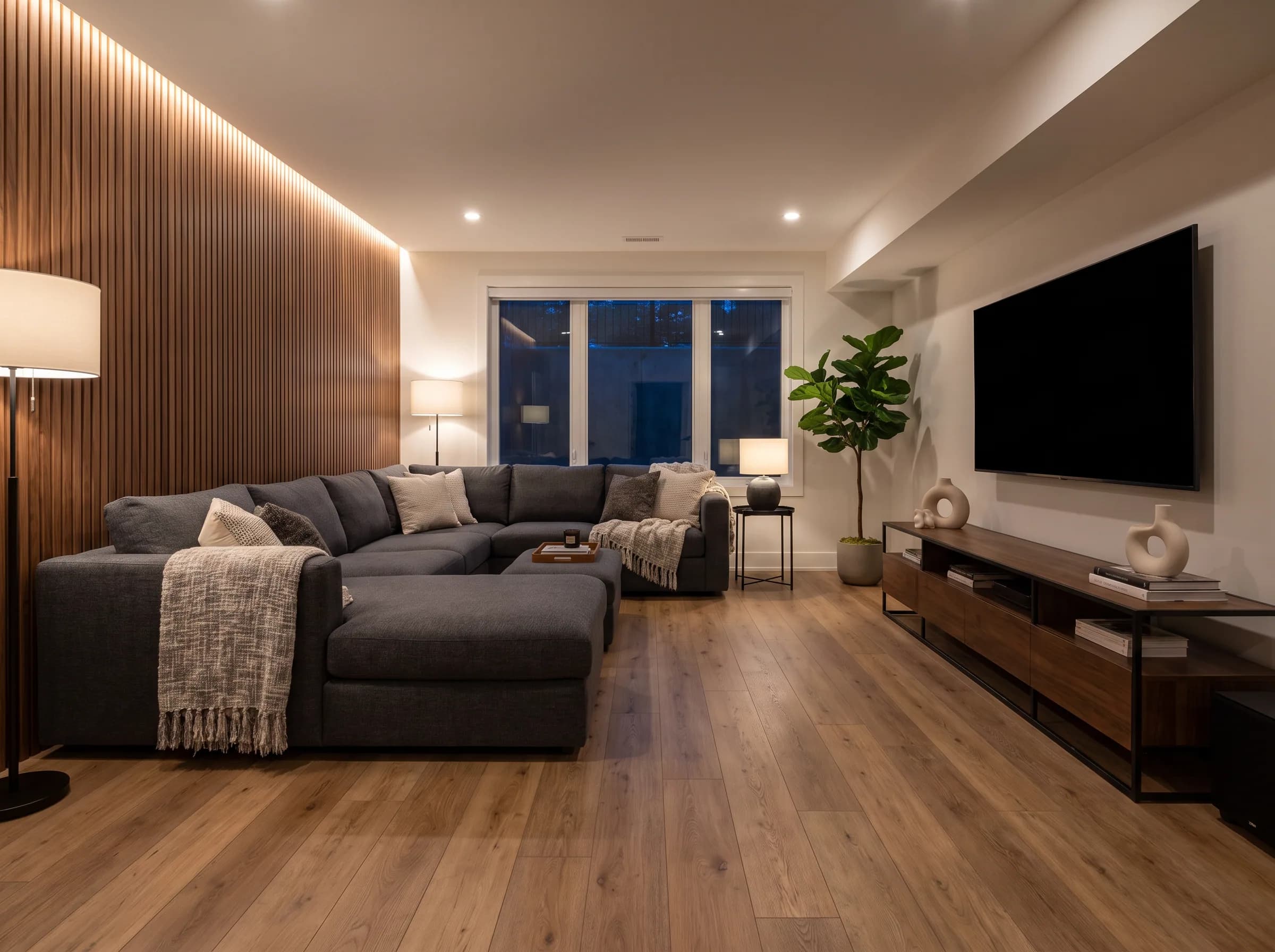
A basement finish is one of the highest-value renovations a homeowner can do. It is also one of the most commonly done wrong — because the results look the same on day one whether the work is right or not. The difference shows up two winters later, when the drywall behind the wet bar is soft.
What the permit actually protects
In most GTA municipalities, a basement finish requires a building permit if you are adding walls, ceilings, plumbing, or electrical. The permit is not paperwork for its own sake. It requires:
- A framing inspection so you can prove the walls are built correctly.
- An insulation inspection so you can prove the assembly meets code (which matters for moisture, not just for warmth).
- An electrical inspection through ESA.
- A final inspection that becomes part of the property record.
Skipping the permit saves days. It costs you every time you refinance, sell, or file an insurance claim on that finished space.
Insulation done right
The most common mistake is fibreglass batts against the concrete wall with a poly vapour barrier on the warm side. This assembly traps moisture and grows mould inside two years.
The correct assembly for below-grade walls in our climate:
- Rigid foam or spray foam directly against the concrete, sealed at edges.
- Stud wall in front of the foam, not against the concrete.
- No poly vapour barrier on the warm side of the stud wall. The foam is the vapour control.
This is not optional. The Ontario Building Code addresses it, and municipal inspectors check for it.
Where owners cut corners and regret it
Undersized dehumidification. A finished basement without a dedicated dehumidifier or ERV in humid summer months will smell before the second summer.
No sump backup. If the basement has a sump, add a battery backup. The one time the power fails during a storm is the one time you needed it.
Skipping the sound isolation. Resilient channel or Green Glue on the ceiling costs a few hundred dollars in a mid-size basement. It is the difference between the basement being usable while the family sleeps upstairs.
Our position
We build basements to code, with the assembly the code intended, and we pull the permit. It is not the cheapest way. It is the way that lasts.